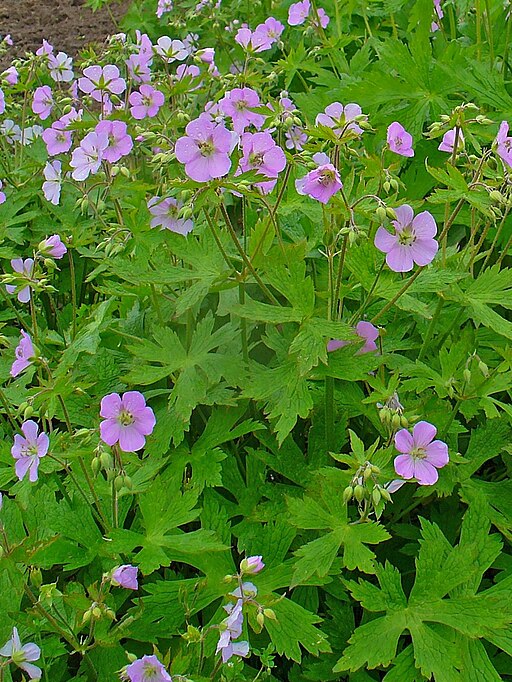
Wild Geranium (Geranium maculatum)
Wild Geranium (Geranium maculatum)
Couldn't load pickup availability
The Woodland Edge Spring Bloomer
Wild Geranium (Geranium maculatum) is one of the most reliable and beautiful spring wildflowers, producing clusters of pink to lavender five-petaled flowers from April through June. This adaptable perennial reaches heights of 1-2 feet and forms attractive clumps of deeply lobed, palmate leaves that provide ornamental value throughout the growing season. Wild Geranium demonstrates remarkable adaptations for diverse pollinator attraction, thrives in partial shade to full sun, and plays an important role in supporting early-season native bees and other pollinators.
Rhizomatous Roots & Adaptability
Wild Geranium develops a thick, woody rhizome with fibrous roots that spread through the upper 1-2 feet of soil, allowing it to form slowly expanding clumps over time. This rhizomatous growth strategy provides stability and longevity—individual plants can persist for decades, gradually increasing in size and flower production. The roots form partnerships with arbuscular mycorrhizal fungi that help the plant access nutrients while improving soil structure. Wild Geranium is exceptionally adaptable, thriving in conditions from partial shade to full sun and tolerating a wide range of soil types from sandy to clay. This versatility makes it valuable for woodland edges, savannas, open prairies, and garden settings. The thick rhizome stores energy reserves that allow the plant to resprout vigorously after disturbance.
Diverse Pollinator Support
Wild Geranium's open, bowl-shaped flowers are accessible to a wide variety of pollinators, making it an important generalist plant that supports pollinator diversity. The flowers attract native bees (including bumblebees, mason bees, and sweat bees), syrphid flies, small butterflies, and beetles. Research has documented over 30 different pollinator species visiting Wild Geranium. The flowers produce both nectar and pollen, with prominent stamens that make pollen easily accessible. The pink to lavender color is highly visible to pollinators, and the flowers have subtle nectar guides (darker veining on the petals) that direct pollinators to the nectar reward. The spring bloom period (April-June) provides critical food during a time when many pollinators are emerging and establishing populations.
Explosive Seed Dispersal & Medicinal Chemistry
Wild Geranium has a fascinating seed dispersal mechanism—the seed capsules are shaped like a crane's bill (giving the family its common name "cranesbill"), and when mature, they explosively split open, flinging seeds several feet from the parent plant. This ballistic dispersal helps the plant colonize new areas and maintain genetic diversity. The common name "maculatum" means "spotted," referring to the leaves which sometimes develop purple-brown spots, particularly as they age in fall. The roots and rhizomes contain high concentrations of tannins and other astringent compounds that provide chemical defense against herbivores and pathogens. These same compounds have been used medicinally for centuries—Indigenous peoples and early settlers used Wild Geranium root as a powerful astringent for treating wounds, diarrhea, and mouth sores.
Unique Facts:
- The deeply lobed palmate leaves turn beautiful shades of red, orange, and burgundy in fall, providing excellent seasonal color
- Can form substantial clumps 2-3 feet wide over time, creating impressive displays in woodland gardens
- More shade-tolerant than most prairie plants, thriving in dappled woodland light while also tolerating full sun
- The foliage remains attractive throughout the growing season, providing textural interest even after flowering ends
- Deer generally avoid Wild Geranium due to the astringent compounds in the foliage
- The explosive seed dispersal can propel seeds up to 30 feet from the parent plant under ideal conditions
Wild Geranium brings reliable spring beauty, diverse pollinator support, and exceptional adaptability to your prairie or woodland edge—providing critical early-season nectar and pollen for 30+ pollinator species, thriving in shade or sun, and creating long-lived clumps that offer three-season interest with spring flowers, summer foliage, and fall color.
Share