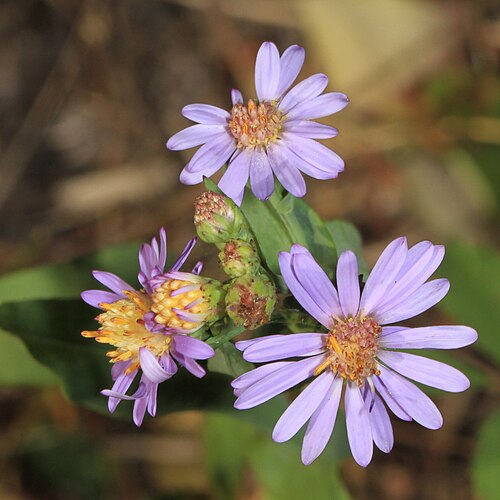
Smooth Blue Aster (Symphyotrichum laeve)
Smooth Blue Aster (Symphyotrichum laeve)
Couldn't load pickup availability
The Prairie's Late-Season Pollinator Lifeline
Smooth Blue Aster (Symphyotrichum laeve) is one of the most ecologically important wildflowers of the tallgrass prairie and open woodland edge. With its striking violet-blue ray flowers surrounding golden-yellow disk florets, this native aster blooms from late August through October—arriving precisely when most prairie plants have finished and migrating monarchs, native bees, and late-season butterflies need it most. Its smooth, waxy blue-green foliage is as distinctive as its flowers, making it a standout in any restoration planting.
Root Architecture & Soil Partnership
Smooth Blue Aster develops a robust fibrous root system that reaches 12–18 inches deep, anchoring the plant firmly in dry to medium soils and making it exceptionally drought-tolerant once established. Like many native asters, it forms associations with arbuscular mycorrhizal fungi (AMF), which dramatically extend the plant's effective root surface area. These fungal networks improve water and phosphorus uptake while connecting Symphyotrichum laeve to the broader soil food web—contributing to the underground carbon economy that makes prairie soils among the most carbon-dense on Earth. As the plant senesces each fall, its root mass and leaf litter add organic matter that feeds soil microbiota through winter.
Specialist Pollinators & Late-Season Biodiversity
Few native plants rival Smooth Blue Aster for late-season pollinator value. It is a critical host for several specialist native bees, including the Aster Mining Bee (Andrena asteris) and the Aster Cellophane Bee (Colletes simulans armata), which collect pollen exclusively from aster species. Research has documented over 70 bee species visiting native asters in a single season. Monarch butterflies (Danaus plexippus) rely heavily on aster nectar during their fall migration to fuel the journey to Mexico—making this plant a direct link in one of North America's most iconic ecological events. Painted Ladies, Common Buckeyes, and numerous skipper species are also frequent visitors.
Wildlife Support & Chemical Ecology
The seeds of Smooth Blue Aster are consumed by American Goldfinches, Dark-eyed Juncos, and sparrows through late fall and winter. The dense basal foliage provides overwintering habitat for beneficial insects, including native bee larvae that overwinter in hollow or pithy stems. Smooth Blue Aster also produces allelopathic compounds that help it compete with invasive grasses, giving it a subtle but meaningful role in suppressing weedy species in restoration plantings. Its smooth, glaucous stems and leaves are notably resistant to deer browse compared to other asters—a practical advantage in landscapes with high deer pressure.
Unique Facts:
- Blooms late August–October, filling a critical nectar gap when most prairie forbs have finished—a keystone species for fall pollinator support
- Host plant for the caterpillars of the Pearl Crescent butterfly (Phyciodes tharos), one of the most common prairie butterflies in the Midwest
- The smooth, waxy blue-green foliage is highly resistant to deer browse, making it one of the more reliable asters in high-pressure landscapes
- Spreads slowly by rhizome to form loose colonies over time, increasing its ecological footprint and pollinator value without becoming aggressive
- Thrives in dry to medium soils and full sun to light shade—one of the most adaptable native asters for Wisconsin restorations
- Indigenous peoples of the Great Plains used aster species medicinally, including as a smudge and in treatments for fevers and respiratory ailments
Smooth Blue Aster is the prairie's final flourish—a plant that saves its greatest ecological contribution for the end of the season, when migrating monarchs, specialist bees, and hungry songbirds need it most. Plant it and extend your restoration's value deep into autumn.
Share