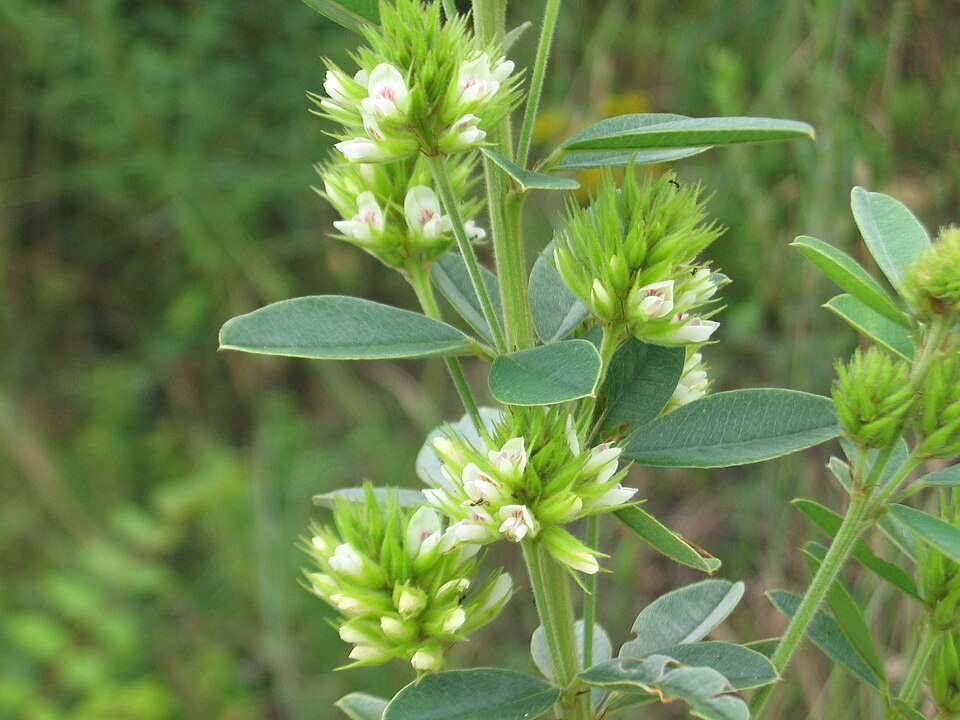
Round-headed Bush Clover (Lespedeza capitata)
Round-headed Bush Clover (Lespedeza capitata)
Couldn't load pickup availability
The Prairie's Nitrogen-Fixing Pollinator Magnet
Round-headed Bush Clover (Lespedeza capitata) is a rugged, deep-rooted prairie legume that punches far above its weight in ecological value. With its distinctive cream-colored flower clusters and striking winter silhouette, this native plant is a cornerstone species for tallgrass prairie restoration—quietly building soil fertility while feeding an impressive array of wildlife.
Nitrogen Fixation & Soil Building
As a legume, Round-headed Bush Clover forms symbiotic relationships with Rhizobium bacteria in specialized root nodules. These bacteria convert atmospheric nitrogen into a plant-available form, effectively fertilizing the surrounding soil without any external inputs. This nitrogen fixation makes Lespedeza capitata an invaluable "soil improver" in prairie restorations, enriching the ecosystem for neighboring plants and reducing the need for amendments. The deep taproot also breaks up compacted soils and draws up minerals from lower soil layers, releasing them as organic matter when leaves and stems decompose.
Specialist Bee & Pollinator Support
Round-headed Bush Clover is a critical host for several specialist native bees, including the Lespedeza Miner Bee (Andrena lespedezae), which collects pollen exclusively from Lespedeza species. The dense, rounded flower heads bloom in mid-to-late summer (July–September), providing nectar and pollen during a period when many other prairie plants have finished blooming. Bumblebees, small native bees, and butterflies—including the Eastern Tailed-Blue and Gray Hairstreak—are frequent visitors, making this plant a late-season biodiversity hub.
Wildlife Value Through Winter
The persistent seed heads of Round-headed Bush Clover are a critical food source for wildlife well into winter. Bobwhite quail, wild turkey, and numerous songbirds—including juncos, sparrows, and goldfinches—rely on the protein-rich seeds during the lean months. The sturdy, upright stems remain standing through snow and ice, providing both food and structural habitat for overwintering insects and small mammals. Few plants offer this level of four-season ecological value.
Unique Facts
- One of the most important legumes in tallgrass prairie ecosystems, fixing nitrogen that benefits the entire plant community
- Host plant for the caterpillars of several skipper butterflies, including the Hoary Edge Skipper
- The woolly, silver-white stems and leaves give the plant a distinctive texture that adds visual interest even when not in bloom
- Extremely drought-tolerant once established—thrives in dry, sandy, or rocky soils where other plants struggle
- The rounded, cream-colored flower clusters turn to attractive russet-brown seed heads that persist through winter, providing exceptional wildlife value and visual interest
- Native Americans used the plant medicinally and the fibrous stems for weaving
Round-headed Bush Clover is a quiet powerhouse of the prairie—building soil, feeding specialists, and sustaining wildlife through the harshest months. Plant it and watch your restoration come alive with life that depends on it.
Share