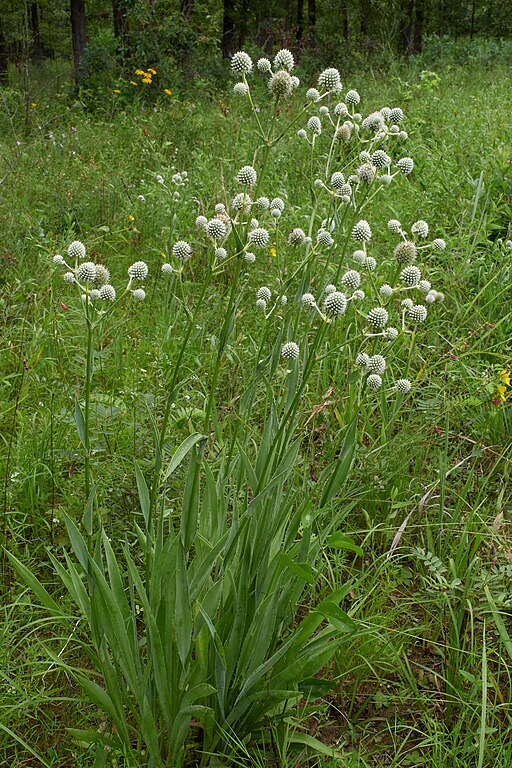
Rattlesnake Master (Eryngium yuccifolium)
Rattlesnake Master (Eryngium yuccifolium)
Couldn't load pickup availability
The Prairie's Architectural Oddity
Rattlesnake Master (Eryngium yuccifolium) is one of the most distinctive and unusual prairie plants, looking more like a desert yucca than a typical wildflower. This remarkable perennial produces stiff, sword-like leaves with spiny margins and spherical white flower heads that resemble tiny pincushions. Despite its fierce appearance, Rattlesnake Master is one of the most important pollinator plants in the prairie, supporting an extraordinary diversity of specialist insects while demonstrating fascinating adaptations for drought tolerance and chemical defense.
Extreme Taproot & Drought Mastery
Rattlesnake Master develops one of the most impressive taproots in the prairie, reaching depths of 8-15 feet into the soil. This massive underground structure allows the plant to access water reserves far below the surface, making it virtually indestructible by drought once established. The taproot is thick and fleshy, storing water and carbohydrates that allow the plant to survive extreme conditions and resprout vigorously after fire or grazing. The roots form partnerships with arbuscular mycorrhizal fungi, though at lower colonization rates than many prairie plants—Rattlesnake Master is remarkably self-sufficient, able to extract nutrients from poor soils without extensive fungal assistance. The deep taproot creates permanent channels in the soil that improve water infiltration and provide pathways for other prairie plants to establish.
Pollinator Diversity Champion
Despite its unusual appearance, Rattlesnake Master is an absolute pollinator magnet. Research has documented over 100 different insect species visiting the spherical flower heads, including an incredible diversity of specialist wasps, native bees, beetles, and flies. The flowers are particularly important for specialist wasps in the families Sphecidae and Crabronidae, many of which are rarely seen on other prairie plants. The compact, spherical flower heads create efficient feeding platforms where multiple insects can forage simultaneously. Each flower head contains dozens of tiny individual flowers that bloom progressively over several weeks (June through August), providing consistent nectar and pollen. The flowers have a subtle sweet fragrance that attracts pollinators from considerable distances.
Chemical Defense & Medicinal History
The common name "Rattlesnake Master" comes from the historical belief that the roots could cure rattlesnake bites—Indigenous peoples and early settlers used the plant medicinally for various ailments. While modern science hasn't confirmed snake bite treatment, the roots do contain saponins and other bioactive compounds that provide chemical defense against herbivores and pathogens. The spiny leaf margins and tough, fibrous texture provide additional physical defense, allowing the plant to maintain attractive foliage throughout the growing season with minimal damage even in areas with high deer pressure. The yucca-like leaves (yuccifolium means "yucca-leaved") are an adaptation for water conservation, with a thick waxy coating that minimizes moisture loss.
Unique Facts:
- The spherical flower heads turn from white to silvery-blue as they mature, creating a stunning color progression
- Can live for decades, with individual plants documented at over 50 years old
- The dried flower heads and seed heads persist through winter, adding architectural interest and providing food for goldfinches
- Extremely drought-tolerant once established, surviving on as little as 12 inches of annual rainfall
- The deep taproot makes mature plants nearly impossible to transplant—they must be started from seed in their permanent location
- Member of the carrot family (Apiaceae), though it looks nothing like typical members such as Queen Anne's Lace or Wild Parsnip
Rattlesnake Master brings architectural drama, exceptional pollinator support, and extreme drought resilience to your prairie—supporting over 100 specialist insects, thriving in the toughest conditions, and creating year-round visual interest with its distinctive form.
Share