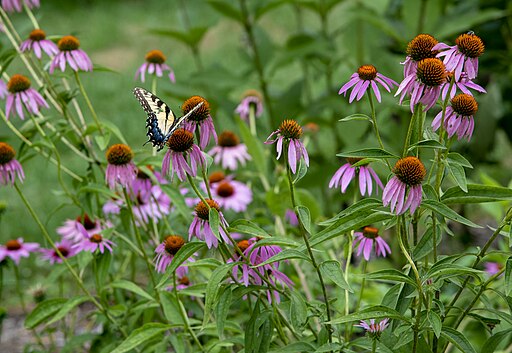
Purple Coneflower (Echinacea purpurea)
Purple Coneflower (Echinacea purpurea)
Couldn't load pickup availability
The Medicinal Pollinator Powerhouse
Purple Coneflower (Echinacea purpurea) is one of North America's most recognizable and ecologically valuable prairie wildflowers. This iconic plant combines stunning beauty with remarkable medicinal properties and exceptional pollinator support. Purple Coneflower demonstrates fascinating adaptations for attracting specialist pollinators, defending itself chemically, and thriving in challenging conditions while supporting an incredible diversity of wildlife.
Chemical Defense & Immune-Boosting Compounds
Purple Coneflower produces a complex array of bioactive compounds including alkamides, caffeic acid derivatives, and polysaccharides that serve dual purposes. These chemicals provide powerful defense against herbivores and pathogens while also creating the immune-stimulating properties that have made Echinacea one of the most widely used herbal medicines worldwide. The highest concentrations of these compounds are found in the roots, which can reach 3-5 feet deep and form extensive partnerships with arbuscular mycorrhizal fungi. These fungal associations help the plant access nutrients in poor soils while the fungi receive sugars in return. The plant's chemical sophistication extends to its flowers, which produce compounds that attract specific pollinators while deterring certain herbivorous insects.
Specialized Pollinator Attraction
The distinctive flower structure is perfectly designed for pollinator efficiency. The prominent central cone (actually hundreds of tiny disc flowers packed together) is surrounded by drooping purple-pink ray flowers that act as landing platforms and visual attractants. The cone produces abundant pollen and nectar over an extended bloom period (June through September), making it a critical food source when other plants may be scarce. Purple Coneflower is particularly important for specialist bees including long-horned bees (Melissodes species) and leafcutter bees, as well as butterflies like the Eastern Tiger Swallowtail and Great Spangled Fritillary. Research has documented over 40 different pollinator species visiting Purple Coneflower, making it a true biodiversity hotspot.
Year-Round Wildlife Support
The ecological value extends far beyond the blooming season. The spiny seed heads (Echinacea means "hedgehog" in Greek, referring to the prickly cone) remain standing through winter, providing essential food for goldfinches, chickadees, nuthatches, and other songbirds who extract the nutritious seeds. The sturdy stems create perching sites and the dried seed heads add architectural interest to the winter landscape. The plant's taproot allows it to survive extreme drought and temperature fluctuations, making it a reliable presence in the prairie ecosystem year after year.
Unique Facts:
- Indigenous peoples used Purple Coneflower medicinally for centuries, treating everything from wounds to snake bites to infections
- Can live for 5-10 years or more, with some plants documented at over 15 years old
- The drooping petals aren't just decorative—they help direct pollinators toward the central cone where nectar and pollen are concentrated
- Extremely adaptable, tolerating a wide range of soil types from clay to sand and pH levels from 6.0-7.5
- The spiny central cone continues to grow throughout the blooming season, with new flowers opening from the bottom up
- Modern research has confirmed many traditional medicinal uses, with studies showing immune-modulating and anti-inflammatory properties
Purple Coneflower brings medicinal power, pollinator support, and year-round beauty to your prairie—combining chemical sophistication with ecological generosity to create a living hub of biodiversity that supports wildlife and connects us to centuries of herbal wisdom.
Share