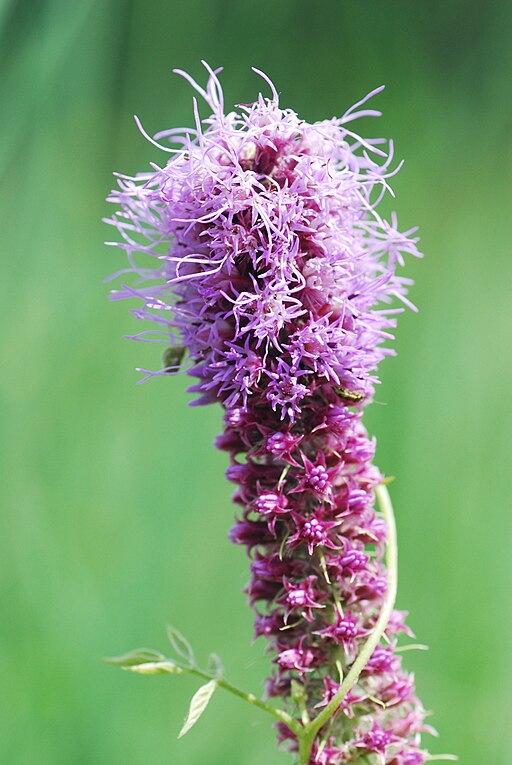
Prairie Blazing Star (Liatris pycnostachya)
Prairie Blazing Star (Liatris pycnostachya)
Couldn't load pickup availability
The Monarch's Favorite Fuel Station
Prairie Blazing Star (Liatris pycnostachya) is one of the most spectacular and ecologically important late-summer wildflowers in the tallgrass prairie. This striking perennial produces dense spikes of vibrant purple-pink flowers that can reach 3-5 feet tall, creating vertical exclamation points across the prairie landscape. Prairie Blazing Star demonstrates unique adaptations for attracting specialist pollinators, particularly butterflies, and plays a critical role in fueling migrating Monarchs during their journey to Mexico.
Corm Storage & Deep Root Architecture
Prairie Blazing Star grows from a specialized underground structure called a corm—a swollen, bulb-like stem base that stores carbohydrates and allows the plant to survive fire, drought, and grazing. Below the corm, the plant develops deep fibrous roots that can reach 5-8 feet into the soil, accessing water reserves and forming partnerships with arbuscular mycorrhizal fungi. These fungal associations help the plant extract phosphorus and other nutrients from prairie soils while the fungi receive sugars in return. The corm's energy storage capacity allows Prairie Blazing Star to produce its impressive flower spikes even in challenging years, making it a reliable presence in the prairie ecosystem. As the plant matures, the corm can grow to the size of a golf ball or larger, representing years of accumulated energy reserves.
Unique Top-Down Blooming Strategy
Prairie Blazing Star has a distinctive flowering pattern that sets it apart from most plants—the flowers open from the top of the spike downward, rather than bottom-up like most spike-flowering plants. This unusual strategy may help attract pollinators by presenting fresh flowers at eye level first, creating a visual beacon that draws attention from greater distances. Each flower spike contains hundreds of individual disk flowers (no ray petals) packed densely together, creating efficient feeding stations. The flowers bloom from July through September, with peak bloom coinciding perfectly with Monarch butterfly migration. Research has shown that migrating Monarchs preferentially visit Liatris species, using the nectar to build fat reserves essential for their 2,000+ mile journey to Mexico.
Butterfly & Specialist Pollinator Magnet
Prairie Blazing Star is one of the most important butterfly plants in the prairie, attracting Monarchs, Swallowtails, Fritillaries, Skippers, and numerous other species. The tubular flowers are perfectly sized for butterfly tongues, while the dense arrangement allows butterflies to feed efficiently without constantly repositioning. The flowers also attract long-tongued bees including bumblebees and specialist bees in the genus Melissodes, as well as hummingbird moths and other beneficial insects. The bright purple-pink color is highly visible to pollinators and creates stunning visual impact in the landscape. Research has documented over 40 different pollinator species visiting Prairie Blazing Star, with butterflies accounting for the majority of visits.
Unique Facts:
- The top-down blooming pattern is rare among flowering plants and creates a distinctive progressive display
- Can live for 10-20 years or more once established, with the corm growing larger and producing more flower spikes over time
- The genus name Liatris may derive from a Greek word meaning "physician," referring to medicinal uses by Indigenous peoples
- Extremely drought-tolerant once established, with the deep roots and corm storage allowing survival through extended dry periods
- The dried seed heads persist through winter, feeding goldfinches and other small birds while adding vertical structure
- Deer generally avoid Prairie Blazing Star due to compounds in the foliage, making it valuable in areas with high browsing pressure
Prairie Blazing Star brings vibrant purple spires, critical butterfly support, and unique botanical architecture to your prairie—fueling migrating Monarchs, supporting diverse pollinators, and creating stunning vertical drama that connects earth to sky.
Share