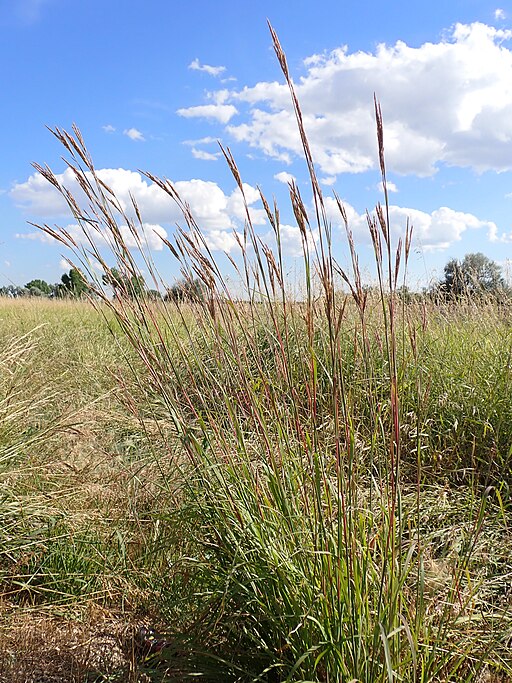
Big Bluestem (Andropogon gerardii)
Big Bluestem (Andropogon gerardii)
Couldn't load pickup availability
The Tallgrass Prairie's Iconic Keystone
Big Bluestem (Andropogon gerardii) is the defining species of the tallgrass prairie, once covering over 170 million acres across North America. This majestic warm-season grass can reach heights of 6-8 feet (sometimes up to 10 feet in ideal conditions), earning it the nickname "King of the Prairie." Big Bluestem is a true ecosystem engineer, fundamentally shaping soil structure, water cycles, and habitat complexity across the landscape.
Extreme Deep Roots & Carbon Sequestration Champion
Big Bluestem develops one of the deepest root systems of any prairie plant, reaching depths of 8-12 feet with some roots documented at 15 feet. This massive underground biomass can account for 70-80% of the plant's total mass, creating a carbon storage system of extraordinary scale. Mature Big Bluestem stands can sequester 5-8 tons of carbon per acre annually, storing it in stable soil organic matter that can persist for centuries. The roots form extensive partnerships with arbuscular mycorrhizal fungi, creating underground networks that can extend the plant's nutrient-gathering reach by up to 100 times. These fungal highways connect entire plant communities, facilitating nutrient exchange and communication across the prairie.
Soil Building & Water Management
The deep, fibrous root system creates permanent channels in the soil that dramatically improve water infiltration—Big Bluestem stands can absorb rainfall at rates up to 10 times faster than conventional turf grass. As roots grow and die back seasonally, they add massive amounts of organic matter deep into the soil profile, building the rich, dark prairie soils that can be 2-3 feet deep. Big Bluestem is also a powerful nutrient cycler, using its deep roots to access minerals from lower soil layers and bringing them to the surface through leaf drop, making nutrients available to shallow-rooted plants.
Wildlife Habitat & Seasonal Transformation
The tall, dense structure creates critical nesting habitat for grassland birds including bobolinks, dickcissels, and meadowlarks. The abundant seeds feed songbirds, game birds, and small mammals from fall through winter. Big Bluestem's most distinctive feature appears in late summer—the seed heads split into three parts resembling a turkey's foot, giving it the common name "turkeyfoot." In fall, the entire plant transforms into stunning shades of copper, burgundy, and purple, creating one of the prairie's most spectacular seasonal displays.
Unique Facts:
- Can live for over 100 years, with some documented stands persisting for multiple centuries
- The name "bluestem" comes from the distinctive blue-purple color at the base of the stems, most visible in spring and early summer
- As a C4 grass, it uses a specialized photosynthetic pathway that makes it 40% more water-efficient than C3 plants
- Historically dominated the tallgrass prairie alongside Little Bluestem and Indiangrass, creating the "sea of grass" that early settlers described
- The deep roots make it virtually impossible to kill by drought—plants can survive years of extreme dry conditions
- Indigenous peoples used the tough stems for thatching, basket weaving, and as a building material
Big Bluestem is the architectural foundation of the tallgrass prairie—building deep soils, storing massive amounts of carbon, managing water cycles, and creating the vertical structure that supports an entire ecosystem for generations to come.
Share