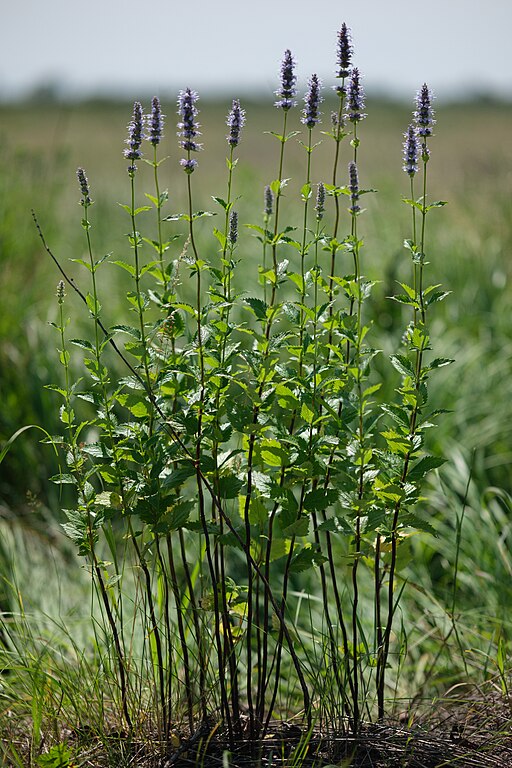
Anise Hyssop (Agastache foeniculum)
Anise Hyssop (Agastache foeniculum)
Couldn't load pickup availability
The Aromatic Pollinator Powerhouse
Anise Hyssop (Agastache foeniculum) is one of the most fragrant and pollinator-friendly plants in the prairie, producing dense spikes of lavender-blue flowers that emit a sweet licorice scent. This versatile perennial reaches heights of 2-4 feet and belongs to the mint family, demonstrating the characteristic square stems and aromatic foliage. Anise Hyssop is exceptional for its extended bloom period, incredible nectar production, and dual value as both a wildlife plant and culinary herb.
Fibrous Roots & Adaptability
Anise Hyssop develops a fibrous root system that spreads through the upper 2-3 feet of soil, forming partnerships with arbuscular mycorrhizal fungi that enhance nutrient uptake. Unlike many prairie plants with extreme taproots, Anise Hyssop's shallow root architecture makes it adaptable to a wide range of soil conditions from dry to medium moisture. The plant can spread slowly through self-seeding and short rhizomes, creating expanding colonies over time without becoming aggressive. This growth strategy allows it to fill gaps in the prairie while coexisting peacefully with other species. The roots add organic matter to the soil as they die back seasonally, improving soil structure and fertility for surrounding plants.
Nectar Production Champion
Anise Hyssop is one of the highest nectar-producing plants in the prairie, with individual flowers secreting exceptional amounts of sugar-rich nectar. Research has shown that a single Anise Hyssop plant can produce enough nectar to support dozens of pollinators daily throughout its extended bloom period (June through September). The tubular flowers are perfectly sized for long-tongued bees, particularly bumblebees and honeybees, but the abundant nectar also attracts hummingbirds, butterflies (including Monarchs, Swallowtails, and Fritillaries), and hummingbird moths. The flowers are arranged in dense terminal spikes that create efficient feeding stations where multiple pollinators can forage simultaneously. Beekeepers particularly value Anise Hyssop because honeybees produce exceptional honey from its nectar—light-colored with a distinctive anise flavor.
Aromatic Chemistry & Multiple Uses
The entire plant is aromatic, producing essential oils rich in methyl chavicol (estragole) that create the distinctive licorice-anise scent. These aromatic compounds serve multiple ecological functions—they attract specific pollinators while deterring certain herbivores, and they may have antimicrobial properties that protect the plant from pathogens. The leaves, flowers, and seeds are all edible and have been used for centuries by Indigenous peoples and herbalists. The leaves make an excellent tea (similar to licorice or fennel), the flowers are beautiful and flavorful garnishes, and the seeds can be collected for culinary use. The plant has documented medicinal properties including antimicrobial and anti-inflammatory effects, though it should be used with appropriate knowledge.
Unique Facts:
- The genus name Agastache comes from Greek words meaning "many spikes," referring to the numerous flower spikes each plant produces
- Can bloom for 8-12 weeks or more with deadheading, providing one of the longest nectar flows in the prairie
- The dried leaves retain their fragrance for months, making excellent potpourri or sachets
- More drought-tolerant than many mint family members once established, thriving with minimal supplemental water
- The seed heads remain attractive through winter and provide food for goldfinches and other small birds
- Self-sows readily in favorable conditions, creating naturalized colonies that expand the pollinator habitat
Anise Hyssop brings aromatic beauty, exceptional nectar production, and culinary versatility to your prairie—supporting pollinators through an extended bloom season, creating sensory connections through fragrance, and offering edible flowers and leaves that connect us to centuries of herbal tradition.
Share