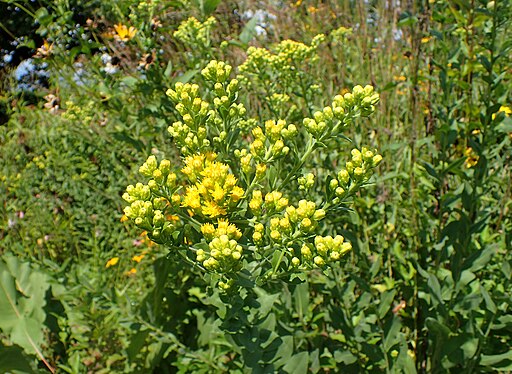
Stiff-leaved Goldenrod (Solidago rigida)
Stiff-leaved Goldenrod (Solidago rigida)
Couldn't load pickup availability
The Late-Season Pollinator Lifeline
Stiff-leaved Goldenrod (Solidago rigida) is one of the most ecologically important late-season wildflowers in the tallgrass prairie, providing critical nectar and pollen when most other flowers have finished blooming. This robust perennial is distinguished by its distinctive flat-topped flower clusters and thick, rigid leaves that give it its common name. Stiff Goldenrod demonstrates remarkable adaptations for drought tolerance, supports an incredible diversity of specialist insects, and plays a crucial role in preparing pollinators for winter.
Deep Roots & Drought Mastery
Stiff-leaved Goldenrod develops a substantial woody caudex (a persistent, thickened stem base) and deep taproot system that can reach 6-10 feet into the soil. This underground architecture allows the plant to access deep water reserves and survive extreme drought conditions that would kill shallow-rooted species. The thick, waxy leaves with their distinctive rigid texture are adaptations for water conservation—the stiff structure reduces surface area exposed to drying winds, while the waxy coating minimizes water loss through transpiration. The roots form extensive partnerships with arbuscular mycorrhizal fungi that help extract phosphorus and other nutrients from the nutrient-poor upland soils where Stiff Goldenrod thrives. Unlike the rhizomatous Canada Goldenrod, Stiff Goldenrod grows in discrete clumps that slowly expand, creating important habitat diversity in the prairie.
Pollinator Diversity Champion
Research has documented over 100 different insect species visiting Stiff-leaved Goldenrod flowers, making it one of the most important pollinator plants in the prairie. The flat-topped flower clusters (called corymbs) create efficient feeding platforms that allow multiple pollinators to feed simultaneously. For migrating Monarch butterflies, goldenrod nectar is essential fuel for their journey to Mexico. Native bees use the abundant pollen to provision their nests before winter, and several specialist bees (oligoleges) depend exclusively on goldenrod species. The late bloom period (August through October) fills a critical ecological gap—when Stiff Goldenrod is flowering, it may be one of the only abundant nectar sources available, making it a true lifeline for pollinators preparing for winter.
Specialist Insect Support & Gall Ecology
Stiff-leaved Goldenrod hosts an incredible diversity of specialist insects beyond pollinators. The plant supports numerous gall-forming insects, each creating unique structures on stems, leaves, and flowers. These galls become miniature ecosystems, providing food and shelter for the gall-makers and later serving as overwintering sites for beneficial insects and food for woodpeckers and other birds. The goldenrod also hosts specialist beetles, moths, and aphids that have co-evolved with Solidago species for millions of years. Supporting these specialists is critical for maintaining insect biodiversity in the prairie.
Unique Facts:
- Despite its reputation, Stiff Goldenrod does NOT cause hay fever—its pollen is too heavy to become airborne; ragweed is the real culprit
- The flat-topped flower arrangement is unique among goldenrods and creates the most efficient feeding platform for pollinators
- Can live for decades, with individual plants documented at over 30 years old
- The thick, rigid leaves remain attractive throughout the growing season, unlike many prairie plants that go dormant in summer heat
- Extremely drought-tolerant once established, thriving in dry upland sites with as little as 15 inches of annual rainfall
- The dried seed heads provide winter food for finches and other small birds while adding architectural interest to the winter landscape
Stiff-leaved Goldenrod is essential infrastructure for late-season pollinators and specialist insects—providing critical food when it's needed most, supporting incredible biodiversity, and demonstrating remarkable adaptations for thriving in the prairie's toughest conditions.
Share