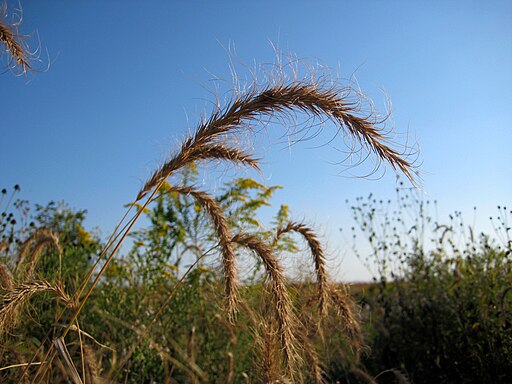
Canada Wild Rye (Elymus canadensis)
Canada Wild Rye (Elymus canadensis)
Couldn't load pickup availability
The Prairie's Soil Stabilizer
Canada Wild Rye (Elymus canadensis) is a native cool-season grass that serves as one of the prairie's most important ecological engineers. This adaptable grass plays a crucial role in soil health, erosion control, and creating habitat structure that countless species depend on.
Deep Roots & Soil Building
Canada Wild Rye develops an extensive fibrous root system that can reach 6-10 feet deep, creating a dense network that holds soil in place even during heavy rains. These roots work in partnership with arbuscular mycorrhizal fungi, which colonize the root cells and extend thread-like hyphae into the surrounding soil. This fungal network can increase the plant's nutrient absorption area by up to 100 times, while the fungi receive carbohydrates in return. As the roots grow and die back seasonally, they add organic matter deep into the soil profile, improving soil structure and water infiltration.
Biodiversity Support
This grass is a critical early successional species, often one of the first to establish in disturbed areas. Its quick growth provides immediate erosion control while creating shelter for slower-growing prairie plants to establish. The seeds are an important food source for songbirds, game birds, and small mammals throughout fall and winter. The dense clumps provide nesting sites and cover for ground-nesting birds and beneficial insects.
Unique Facts
- Can germinate and grow in cooler temperatures than warm-season grasses, providing early spring growth
- Tolerates partial shade better than most prairie grasses, making it valuable for woodland edges
- The nodding seed heads are designed for wind dispersal, with seeds that can travel considerable distances
- Can live 3-5 years, reseeding itself to maintain populations
- Historically used by Indigenous peoples for basket weaving and thatching
By planting Canada Wild Rye, you're establishing a foundational species that stabilizes soil, feeds wildlife, and creates the conditions for a diverse prairie ecosystem to flourish.
Share