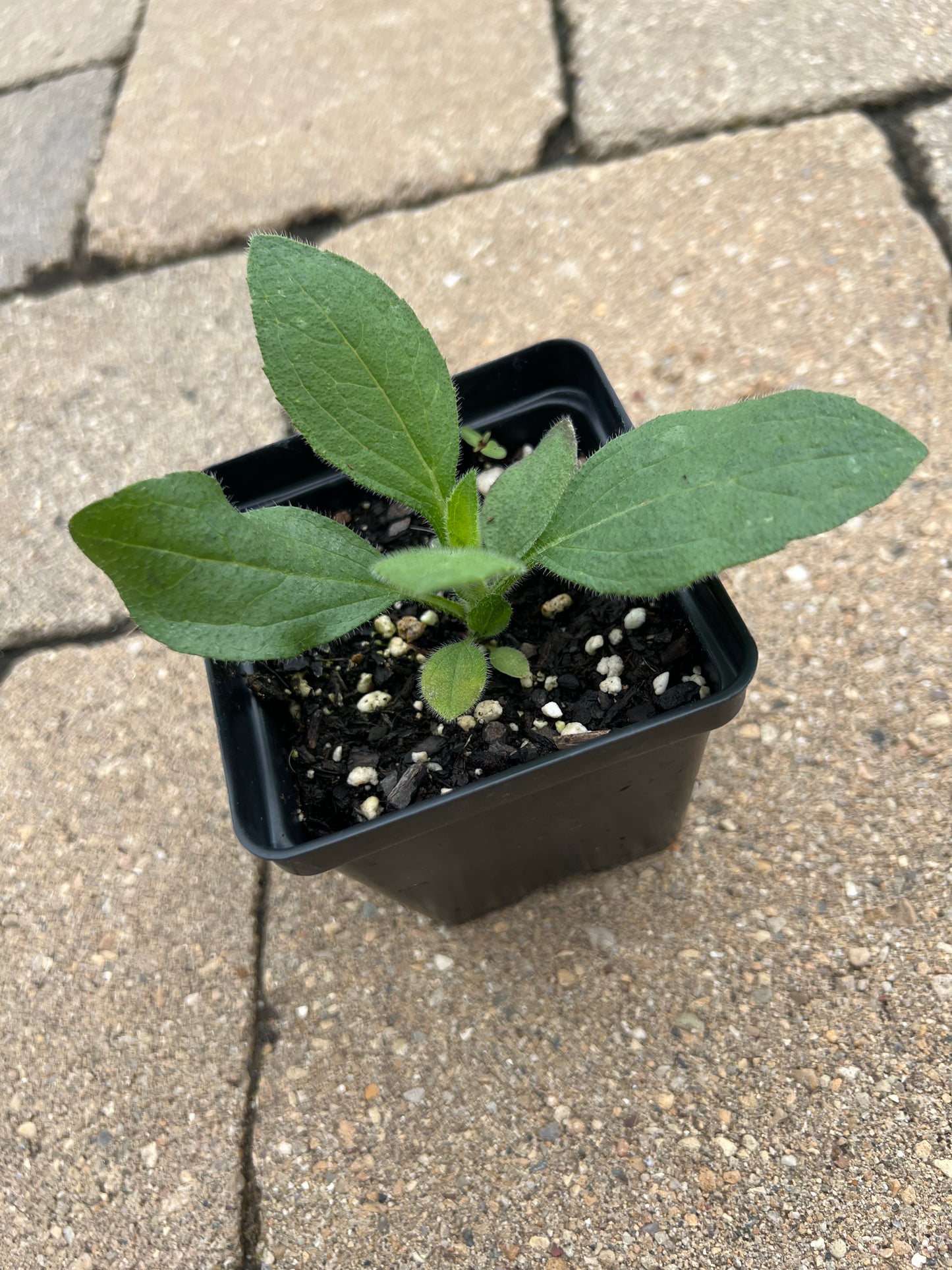
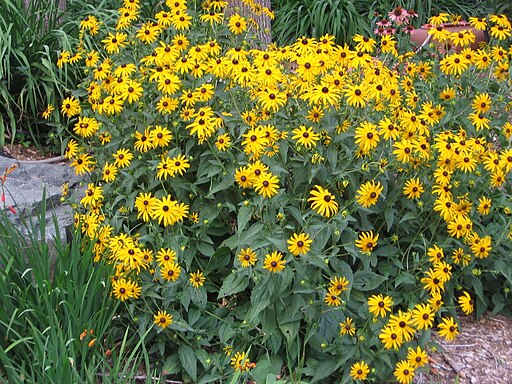
Black-eyed Susan (Rudbeckia hirta)
Black-eyed Susan (Rudbeckia hirta)
Couldn't load pickup availability
The Prairie's Resilient Generalist
Black-eyed Susan (Rudbeckia hirta) is one of North America's most recognizable and ecologically important wildflowers. This adaptable plant demonstrates remarkable resilience and plays a crucial role in supporting pollinators, improving soil, and pioneering disturbed areas.
Pollinator Magnet & Specialist Support
Black-eyed Susan's distinctive flowers are actually composite flower heads containing hundreds of individual flowers—the dark center cone holds up to 250 tiny disc flowers, while the yellow "petals" are actually ray flowers. This structure provides abundant nectar and pollen for a wide variety of pollinators. Importantly, Black-eyed Susan is a host plant for several specialist butterflies, including the Silvery Checkerspot, whose caterpillars feed exclusively on Rudbeckia species. The flowers bloom for an extended period (June through October), providing consistent food when other sources may be scarce.
Soil Pioneer & Mycorrhizal Partner
As a short-lived perennial or biennial, Black-eyed Susan excels at colonizing disturbed soils. It forms partnerships with arbuscular mycorrhizal fungi that help it extract nutrients from poor soils while improving soil structure. The plant's fibrous root system helps prevent erosion and adds organic matter as roots die back. Black-eyed Susan is often one of the first plants to establish after disturbance, creating conditions that allow other prairie species to follow.
Unique Facts
- The dark center cone is actually a seed head that can produce over 1,000 seeds per flower
- Seeds can remain viable in the soil for up to 3 years, creating a persistent seed bank
- The "hairy" stems and leaves (hirta means "hairy") help reduce water loss and deter some herbivores
- Can adapt to a wide pH range (5.5-7.5) and various soil types from clay to sand
- Named after "Black-Eyed Susan," a character in an 18th-century English poem
- The seed heads remain standing through winter, feeding birds and adding visual interest
Black-eyed Susan is a foundational prairie plant that supports specialist butterflies, feeds countless pollinators, and helps heal disturbed soils while bringing cheerful color to your landscape.
Share